Payment behavior
Amount, channel, merchant, velocity, timing, location, and unusual transfer patterns.

Banking Use Case
Detect suspicious behavior in milliseconds, reduce financial loss, and strengthen compliance with scalable streaming data and AI architecture.
Overview
Modern banking teams need fast, explainable decisions across transactions, customer behavior, regulatory monitoring, and risk controls. This solution combines streaming data pipelines, analytics, and machine learning to detect anomalies and trigger action before fraud becomes expensive.
Risk Signals
Amount, channel, merchant, velocity, timing, location, and unusual transfer patterns.
New devices, login anomalies, beneficiary changes, risk segment shifts, and activity spikes.
Shared accounts, linked entities, circular transfers, mule behavior, and AML graph signals.
Queue volume, analyst action, false positives, escalation trends, and confirmed outcomes.
Core Capabilities
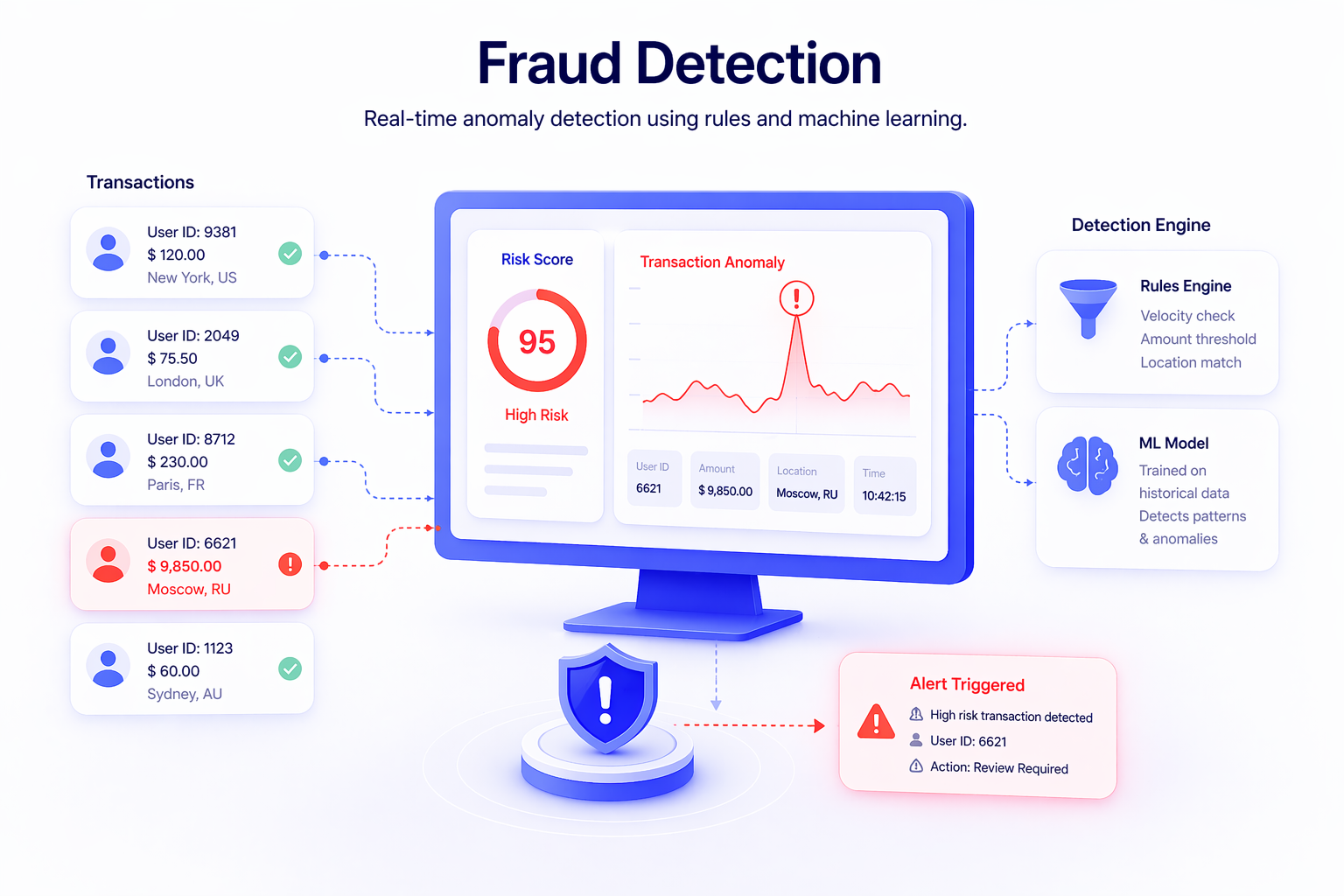
Score transactions in real time and highlight unusual behavior.
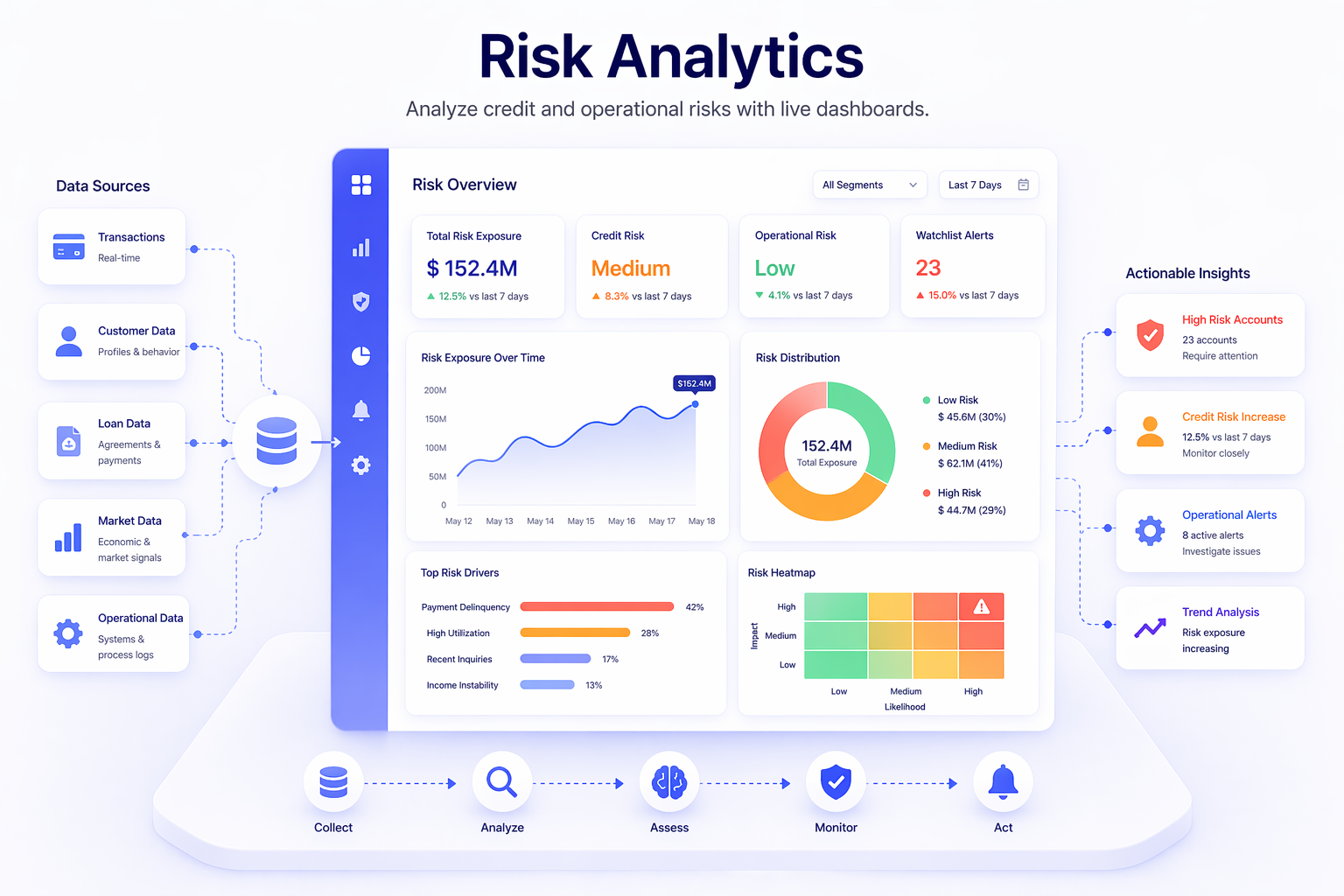
Prioritize accounts, segments, and events by risk exposure.
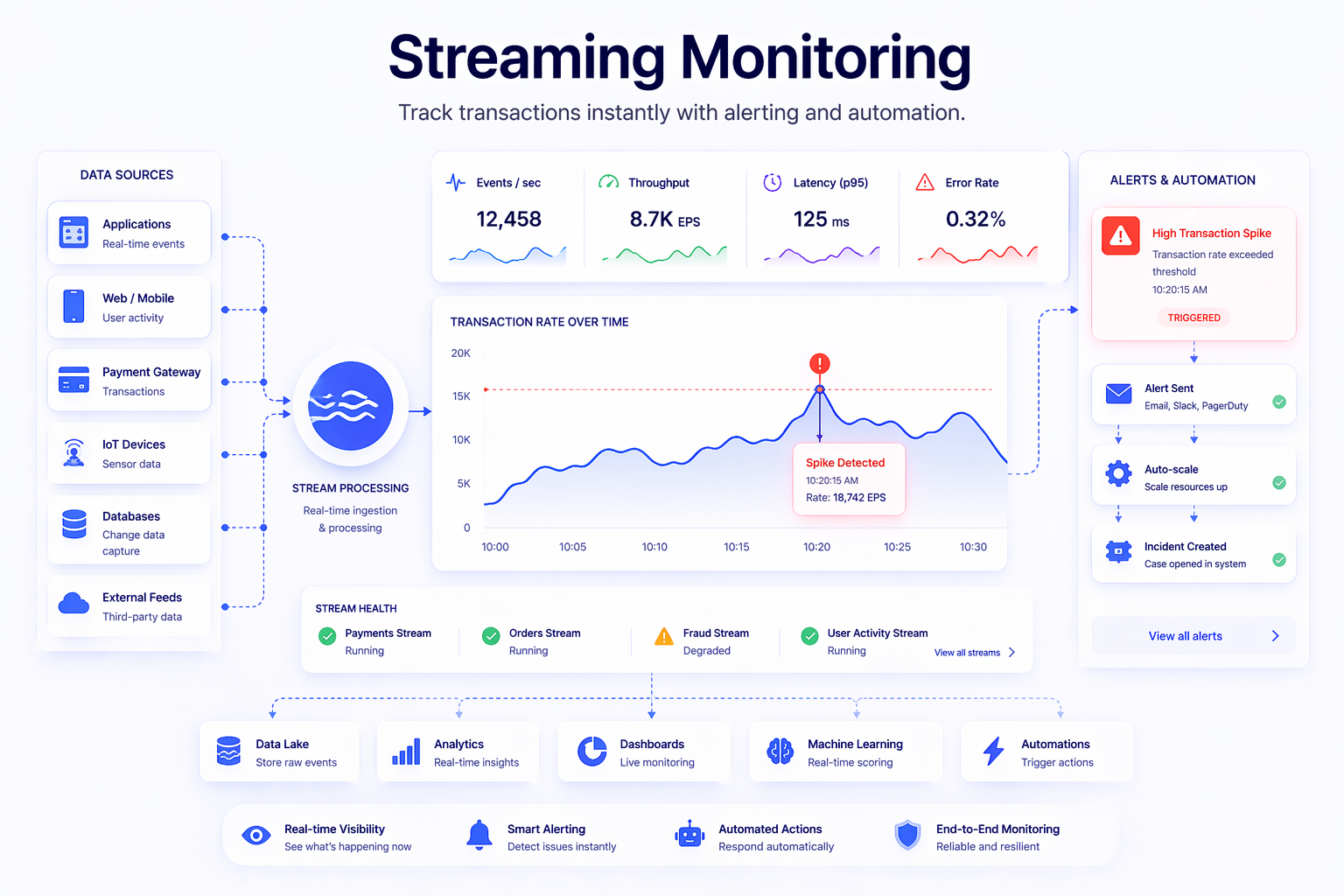
Monitor events, alerts, and response status continuously.
Architecture
Workflow
Stream transaction, account, device, and customer events from core banking systems.
Use rules, features, and AI models to detect unusual behavior patterns.
Route suspicious activity to analysts, automated controls, or downstream case tools.
Feed confirmed outcomes back into model training and monitoring workflows.
Decision Flow
Transaction, login, device, account, and customer events enter the streaming layer.
Rules, features, behavioral models, and graph patterns calculate risk level.
High-risk events are ranked by exposure, customer value, and confidence.
Block, step-up verify, route to analyst, open a case, or continue monitoring.
Confirmed outcomes tune thresholds, rules, dashboards, and model monitoring.
Applications
Detect suspicious card, transfer, payment, and digital wallet activity instantly.
Identify money laundering patterns through graph, rules, and behavioral analytics.
Predict repayment risk using customer behavior, historical data, and model scoring.
Segment customers and personalize products while keeping risk controls visible.
Who Uses It
Banking intelligence works best when analysts, compliance, fraud teams, and executives can see the same trusted risk picture at different levels of detail.
Review suspicious activity, evidence, decision history, and recommended action.
Track suspicious networks, thresholds, case status, and regulatory indicators.
See alert volume, service levels, escalations, and analyst workload.
Measure loss avoided, risk trends, operational efficiency, and control health.
Expected Impact
Fraud exposure through faster detection and better event prioritization.
Risk response across digital channels, transfers, cards, and account activity.
False positives through feedback loops, better features, and model monitoring.
Visibility into rules, alerts, cases, outcomes, and governance.
Ready to modernize risk intelligence?