Loss and event details
Claim type, severity, timing, location, repair estimate, documents, and payout history.

Insurance Use Case
Detect fraudulent claims, optimize underwriting decisions, and reduce loss with real-time data pipelines and AI-driven analytics.
Overview
Insurance providers need fast, explainable insight across claims, policies, underwriting, and fraud detection. This solution combines streaming data pipelines, analytics, and machine learning to identify risk early and improve operational efficiency across the claim lifecycle.
Risk Signals
Claim type, severity, timing, location, repair estimate, documents, and payout history.
Policy age, coverage gaps, premium behavior, endorsements, and prior claim patterns.
Repeated claims, unusual timing, channel behavior, identity signals, and relationship networks.
Weather, location risk, provider history, vehicle data, property data, and third-party signals.
Core Capabilities
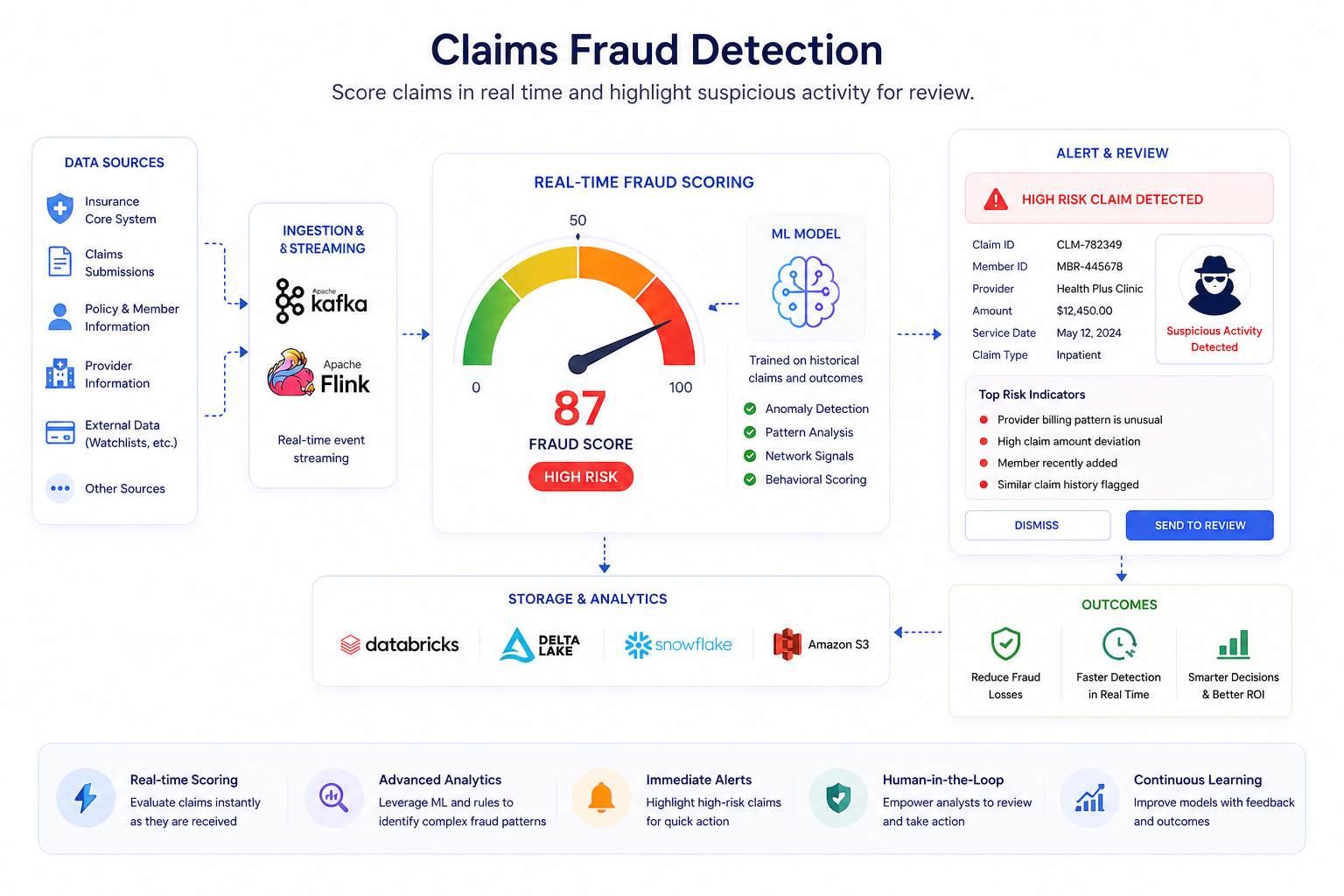
Score claims in real time and highlight suspicious activity for review.
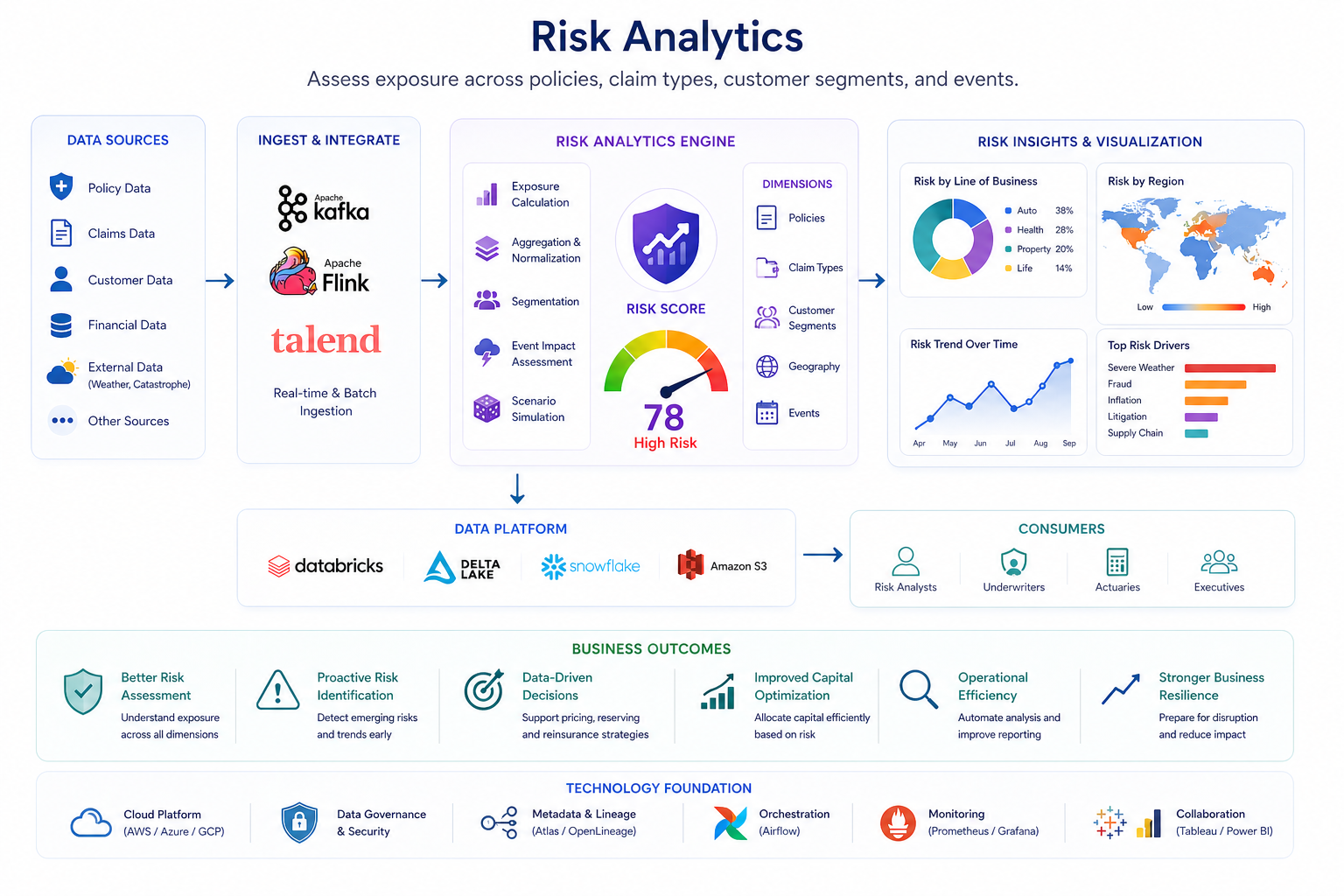
Assess exposure across policies, claim types, customer segments, and events.
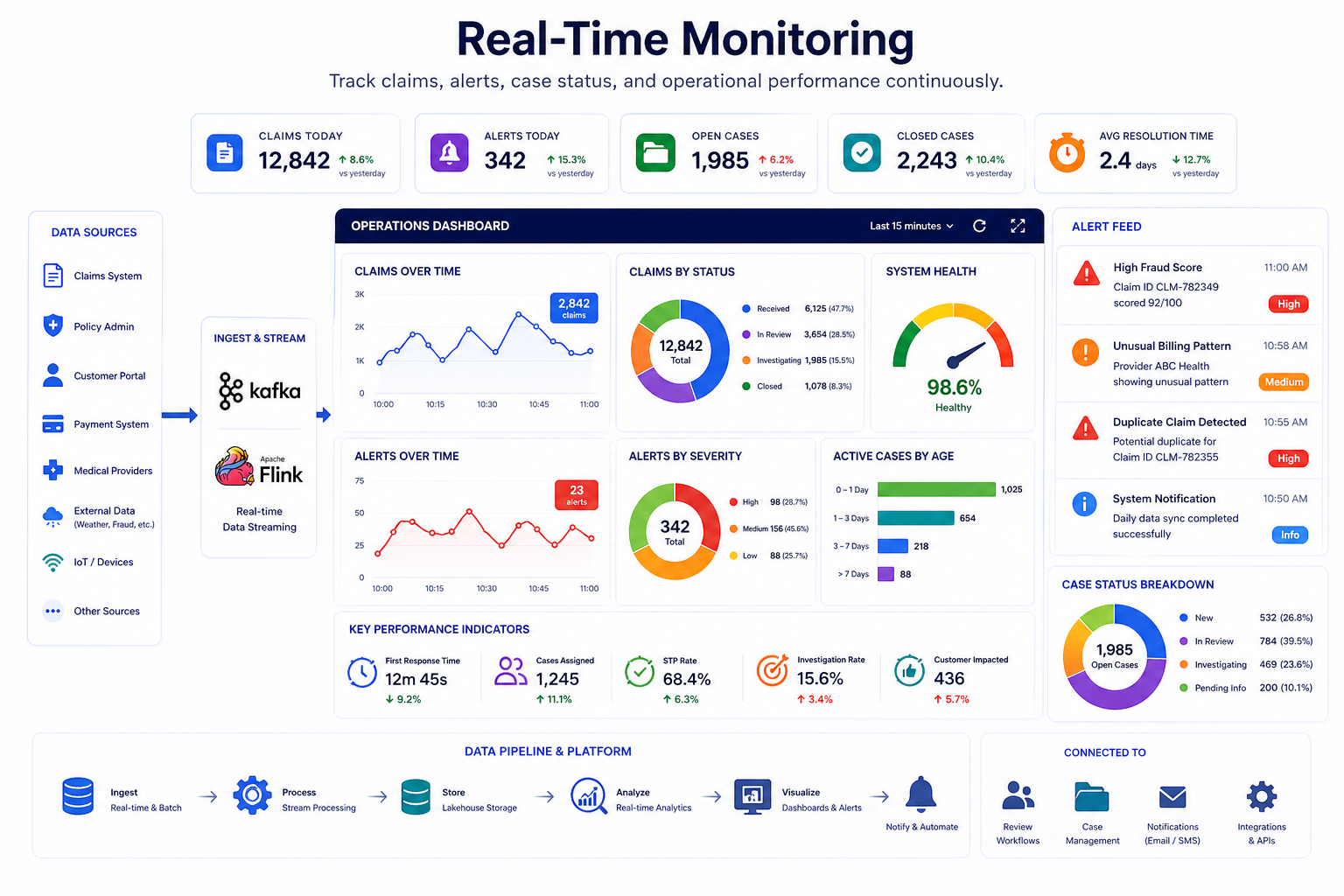
Track claims, alerts, case status, and operational performance continuously.
Architecture
Workflow
Ingest claims, policy, customer, device, partner, and external risk data sources.
Apply rules, features, and AI models to detect fraud and assess claim severity.
Route alerts to claims adjusters, investigation teams, or automated workflows.
Use confirmed claim outcomes to refine models, thresholds, and business rules.
Decision Flow
Claim, policy, customer, document, provider, and external data enter the platform.
Rules and models evaluate fraud probability, severity, complexity, and coverage fit.
Claims are routed to straight-through processing, adjusters, investigation, or special handling.
Teams act with evidence, recommended next steps, and clear claim context.
Outcomes update fraud rules, risk models, provider scoring, and settlement analytics.
Applications
Detect fraudulent claims across health, motor, property, and commercial insurance.
Evaluate risk profiles using historical, behavioral, geographic, and external data.
Improve claim processing efficiency, triage priority, and settlement turnaround time.
Segment customers, personalize offers, and reveal retention or cross-sell signals.
Who Uses It
Insurance intelligence connects adjusters, fraud investigators, underwriting, and leaders around the same evidence-backed view of risk and performance.
See claim complexity, supporting evidence, recommended action, and service targets.
Review anomaly signals, repeated behavior, linked claims, and provider risk.
Use claim outcomes and customer behavior to tune policy risk and pricing signals.
Monitor loss ratio, turnaround time, fraud exposure, and claim operation health.
Expected Impact
Claim leakage through better fraud detection, triage, and severity prediction.
Claim turnaround through automated routing and priority recommendations.
Underwriting signals from historical claim behavior and risk segmentation.
Evidence trails for adjusters, investigators, auditors, and leadership.
Ready to reduce claim risk?